Making Walks Part of Recovery and Routine
Walking can support recovery when pace, distance, and stimulation match the dog’s current capacity.
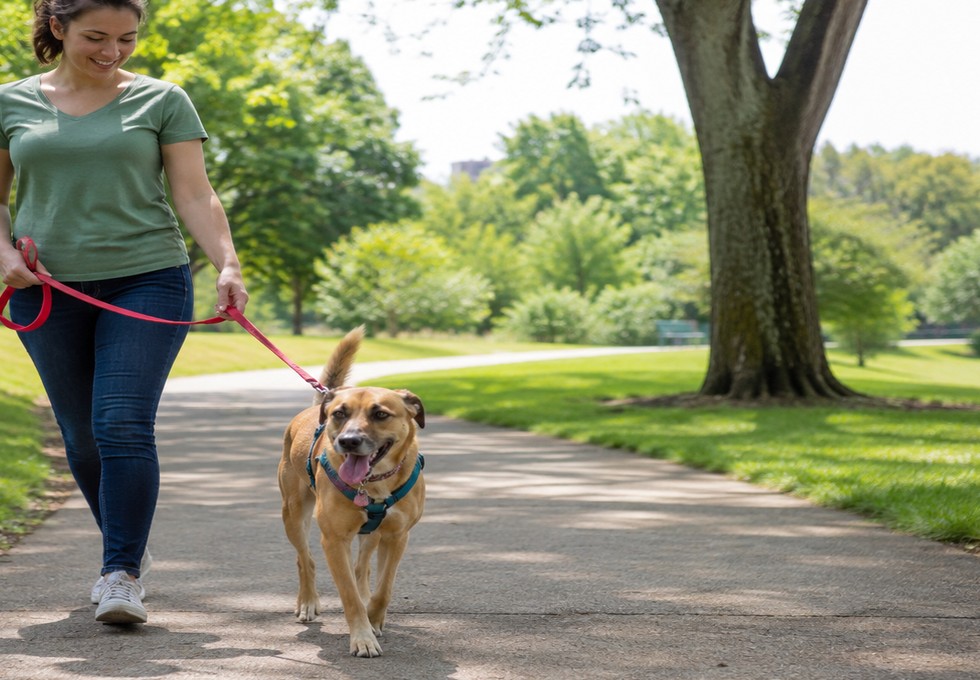
Start by lowering pressure
Walking can support recovery when pace, distance, and stimulation match the dog’s current capacity. Many rescue dogs do better when the first goal is clarity rather than stimulation. A steady routine often helps the dog feel safer more quickly than constant activity.
Create a routine the home can keep
Start with shorter predictable routes. The most helpful system is one the household can repeat on weekdays, busy mornings, and ordinary evenings without turning the dog into a project.
Use the environment as part of the plan
Use sniffing as part of decompression. Layout matters: bowls, bed location, entryway space, and quiet areas all change how much decision-making the dog has to do.
Look for small signs of improvement
Let routine beat intensity. Rescue progress often appears as softer body language, easier transitions, and better recovery after stimulation rather than dramatic overnight change.
Key takeaways
- Start with shorter predictable routes.
- Use sniffing as part of decompression.
- Let routine beat intensity.
New Life Dog Rescue is designed as a readable practical resource for exactly these kinds of everyday rescue-dog questions.